On the fifteenth day of the eighth lunar month, many Chinese families mark the Mid-Autumn Festival. Its familiar images are simple: a round moon, shared mooncakes and people gathering together. Around those images are layered customs and stories, rather than one explanation that covers every place and period.
This is a cultural introduction, not a claim that all present-day customs existed unchanged in antiquity. Festival dates should be checked for the intended year.
A night for looking at the moon
The traditional calendar gives the festival its date, so its Gregorian date changes from year to year. The full-looking moon offers a natural image of completeness, and reunion is a major theme of the celebration. People who are far apart can imagine looking toward the same sky. Moon appreciation need not take one fixed form: a quiet family evening and a lively community gathering can both make the moon their focus.
Food and light at the festival
Mooncakes are shared and given as gifts, but their fillings, crusts and presentation vary. Their round form can express the wish for togetherness. Lanterns also play a visible role in many celebrations, including those documented in Singapore by the Singapore Chinese Cultural Centre. It is useful to name the community when describing a custom. A practice recorded in one city today is not automatically evidence for what every family did in ancient China.
The stories that accompany the moon
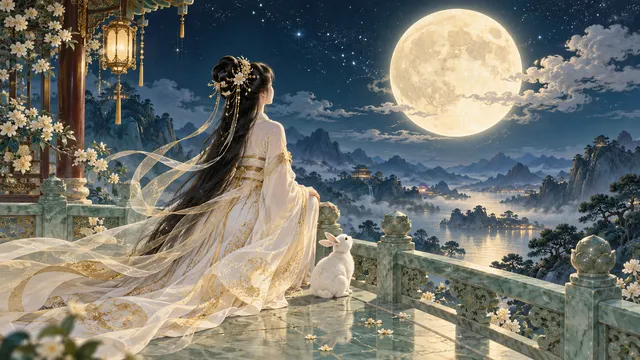
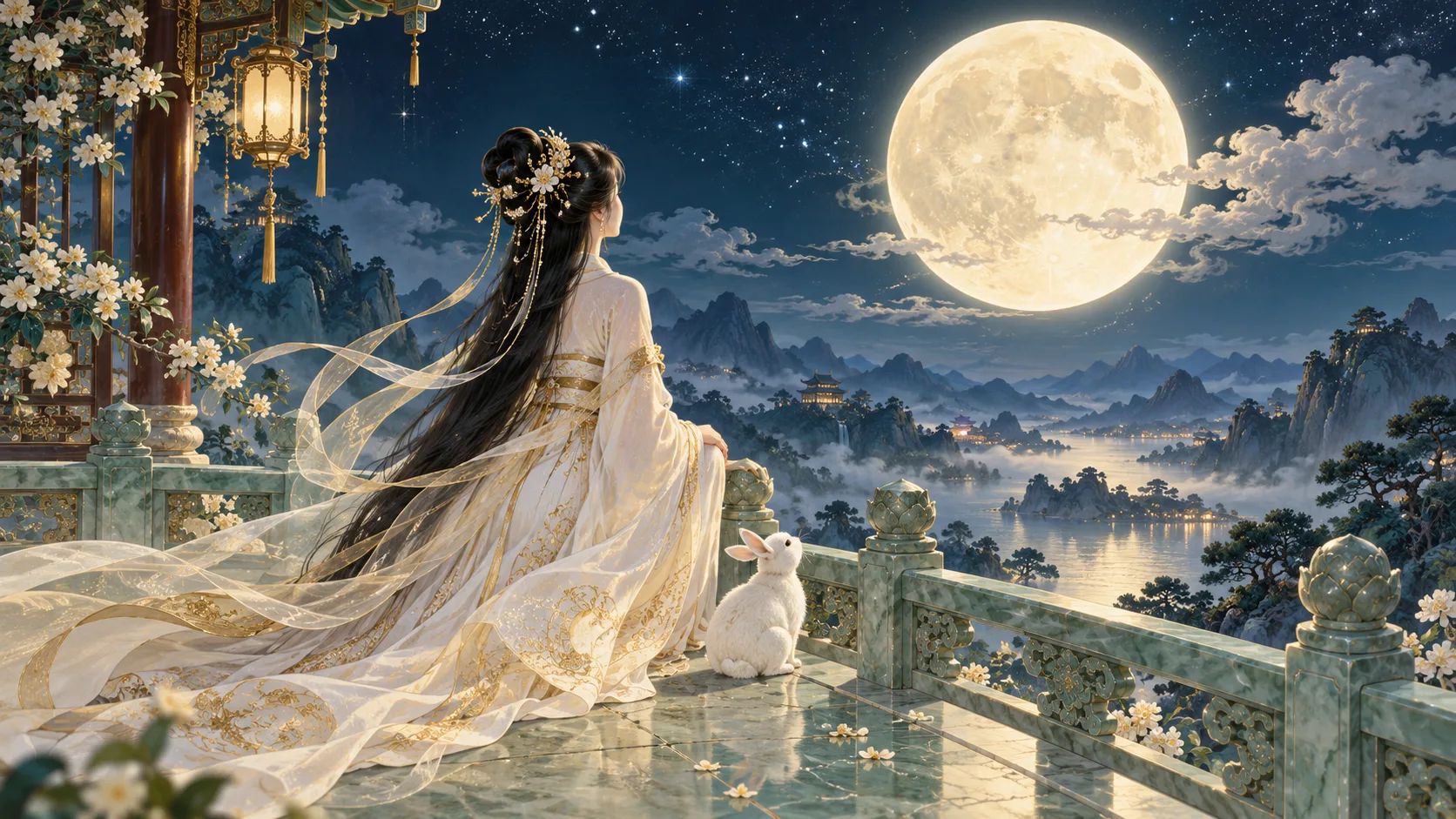
Chang’e’s ascent and the moon rabbit are among the stories associated with the season. They enrich the festival without functioning as a single historical account of its invention. The contrast between a goddess separated from earth and people hoping to reunite can make the evening especially moving. Read the myths as stories and the customs as practices with their own histories; together they explain why a shared moon remains such an enduring image.
Sources & further reading
- ChinaCulture — Mid-Autumn Festival
- Singapore Chinese Cultural Centre — About Mid-Autumn
- British Museum — Chang’e and the Mid-Autumn Festival