
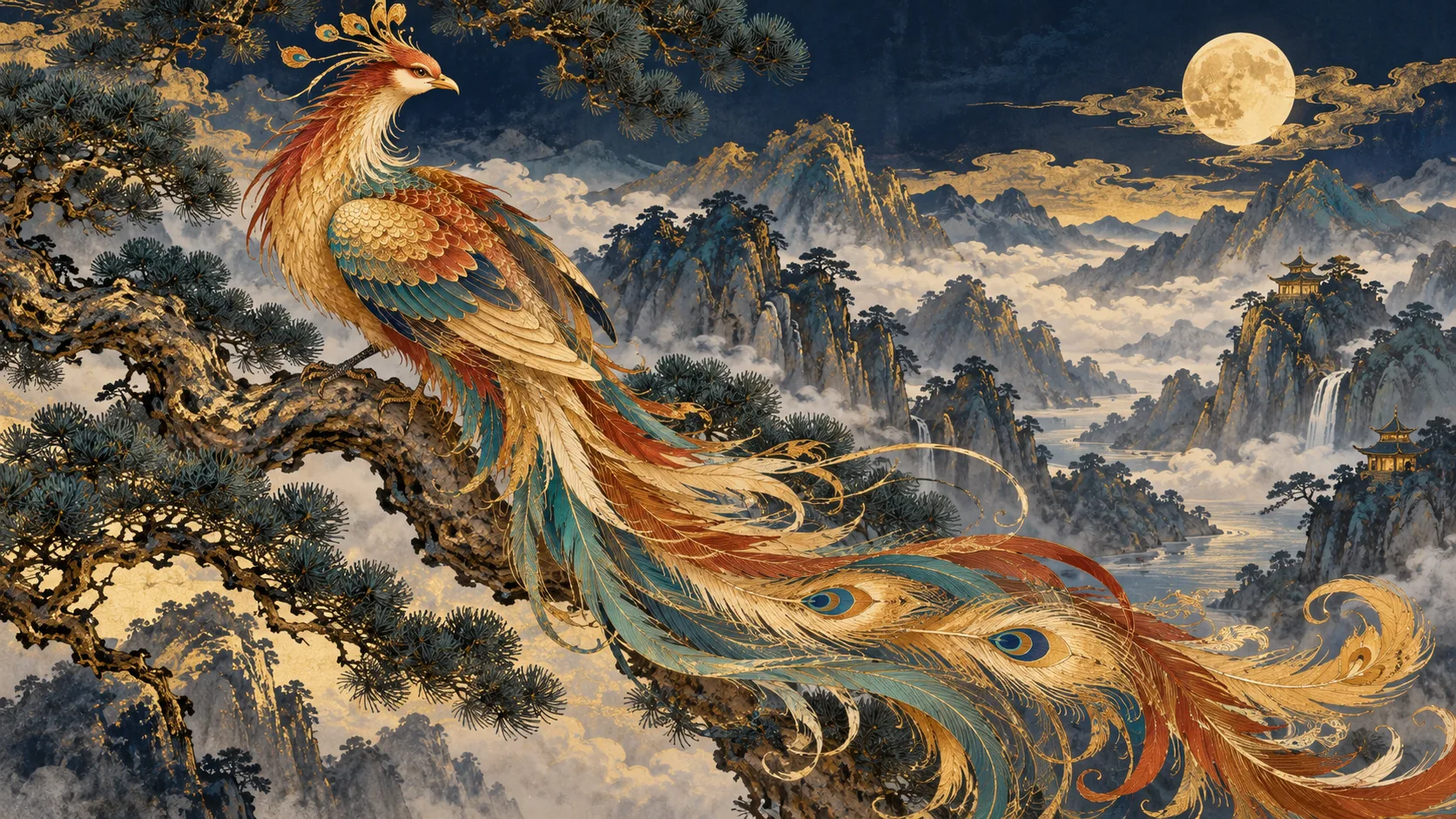
The fenghuang is often called the Chinese phoenix in English. That familiar translation helps readers recognize a marvelous bird, but it can also mislead. To understand the fenghuang, begin with auspicious appearances, moral virtue and harmony, rather than a bird rising from a fire.
“Chinese phoenix” is a conventional English label. It does not make the fenghuang and every Western phoenix tradition identical.
A bird that announces harmony
In classical traditions, the arrival of this extraordinary bird can signal a well-ordered world or an admirable ruler. Its beauty belongs to an ethical story: good government and virtuous conduct find an answering sign in nature. The bird is not simply a monster for a hero to defeat. The Book of Rites places it beside the dragon, qilin and tortoise among exceptional creatures, a grouping discussed by the Seattle Art Museum.
Changing feathers, changing meanings
Descriptions combine features of different animals, while artists give the bird an elegant neck and a richly extended tail. Gendered meanings also change with context. Earlier explanations distinguish male feng and female huang; later imagery frequently pairs a phoenix with a dragon to express complementary harmony. A Qing marriage charm in the British Museum offers one concrete example. Courtly pictures can connect the bird with the empress and other elite women.
Does the fenghuang rise from ashes?
Do not assume that it does. The familiar English word phoenix brings its own stories of death and renewal, but those stories are not the defining narrative of the Chinese fenghuang described in these sources. Modern fantasy may combine traditions creatively. When reading an older painting or text, ask which bird, which period and which setting you are looking at. That preserves the distinctive history behind a convenient translated name.
Sources & further reading
- Seattle Art Museum — Phoenix
- Key Concepts in Chinese Thought and Culture — Phoenix
- British Museum — Dragon and Phoenix Marriage Charm